
The San Juan Mountains of Colorado
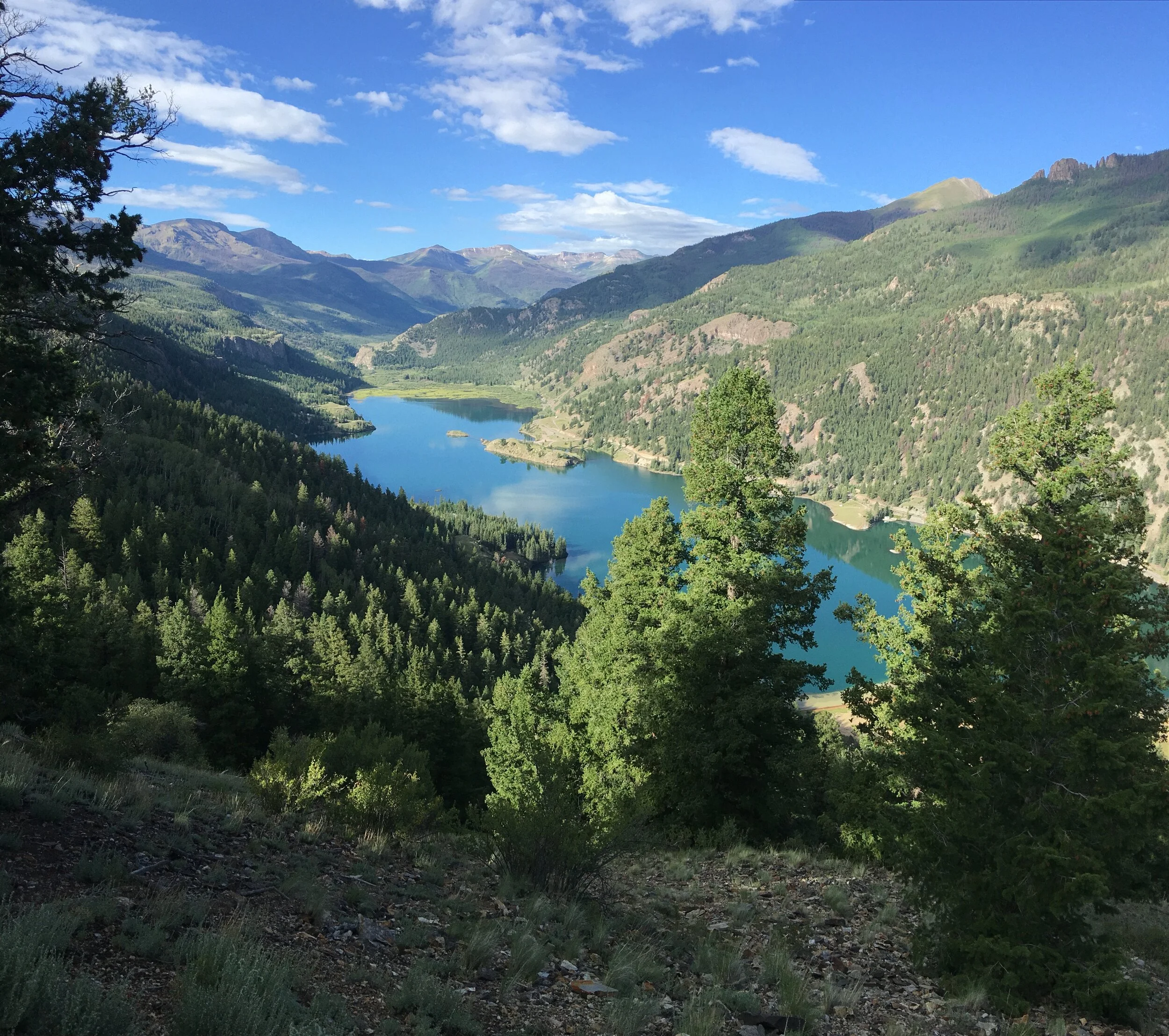
Lake City sits in the northern San Juan Mountains. Uncompahgre Peak, the highest point in the range, is about 7 miles west of town.
Where are the San Juan Mountains?
The San Juans are in southwestern Colorado and reach south into northern New Mexico. They cover more than 10,000 square miles, an area larger than Massachusetts, and no range in Colorado covers more ground. Lake City, Silverton, Ouray, Telluride, Creede, and Pagosa Springs are all in the San Juans.
Are the San Juans part of the Rocky Mountains?
Yes. The San Juans are one of the ranges that make up the Rockies in Colorado.
How were the San Juan Mountains formed?
Most of the San Juans are volcanic rock. Starting about 35 million years ago, a series of huge eruptions emptied magma chambers underground, and the ground above them collapsed into wide craters called calderas. Geologists have mapped about 15 of them in the range. Ice Age glaciers later carved that rock into the peaks and basins you see today.
The youngest caldera is right here. The Lake City caldera formed about 23 million years ago, inside an older and larger one. The rock from that eruption is called Sunshine Peak Tuff, after one of the fourteeners south of town. Uncompahgre Peak is volcanic rock too, but it was never a volcano.
How high are the San Juan Mountains?
Uncompahgre Peak is the highest, at 14,316 feet. Older maps list it at 14,309, but a 2024 NOAA survey remeasured it. It’s the sixth-highest peak in Colorado. The San Juans have at least a dozen fourteeners, depending on how you count, and five are close to Lake City: Handies, Redcloud, Sunshine, Uncompahgre, and Wetterhorn. Lake City itself sits at nearly 8,700 feet.
Read more: Climbing the Five Fourteeners Near Lake City
Do the San Juans extend into New Mexico?
Yes. The south end of the range crosses into northern New Mexico, where the mountains drop off toward lower plateaus. The highest peaks are in Colorado.
More about the San Juans
Gold and silver mining in the late 1800s built Lake City, Silverton, Ouray, and Telluride.
The Ute people lived in the San Juans for hundreds of years before the miners came.
The Weminuche Wilderness, the largest wilderness area in Colorado at nearly 500,000 acres, is in the San Juans.
Telluride’s airport, at 9,070 feet, is the highest in the U.S. with regular commercial flights.
Seeing the San Juans from Lake City
The Alpine Loop leaves town on Henson Creek Road and County Road 30 and climbs over Engineer and Cinnamon Passes into the middle of the range. Closer to town, the Windy Point Scenic Overlook looks down on the Slumgullion Earthflow and Lake San Cristobal. Or stay put: the deck at the lodge faces the peaks of Hinsdale County.
Ready to book your stay in Lake City? We can’t wait to meet you!